

The Language Services Blog | News & Information
Multimedia Localization: How Transcription, Subtitling and Translation Work Together
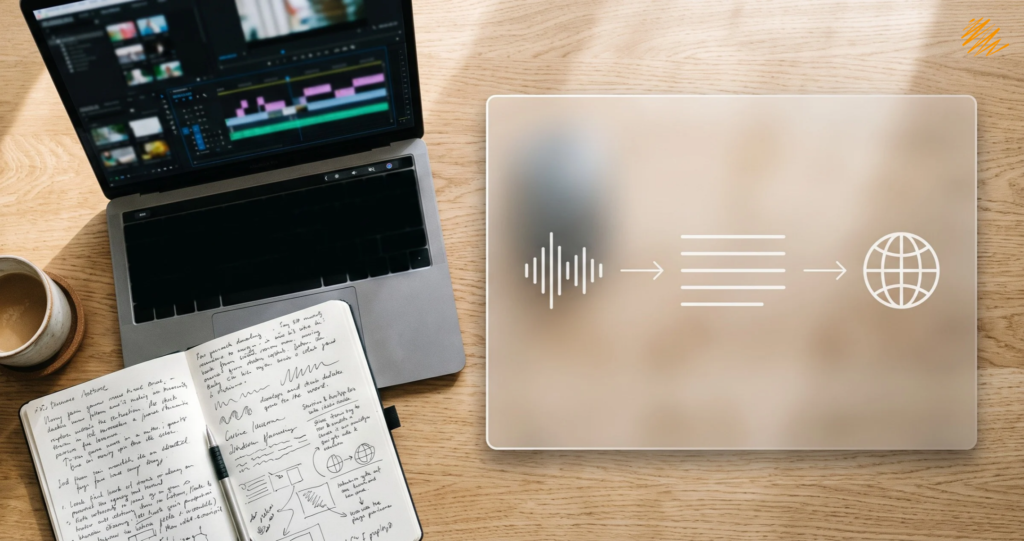
A video feels finished once it is edited. For a multilingual audience, the real work starts there. Multimedia localization turns one recording into versions that work in other languages and cultures. It depends on three steps done in the right order: transcription, translation, and timed text such as subtitles. This guide explains each step, how they connect, and what to prepare before you ask for a quote. Multimedia localization starts with an accurate transcript. What Multimedia Localization Includes Multimedia localization adapts audio and video content for another language and market. That covers scripts, dialogue, subtitles, and captions. It can also cover graphics and audio that need a local fit. As a result, the work sits between translation and media production. However, two terms cause confusion. The W3C's guidance on accessible audio and video describes captions as text that conveys both speech and non-speech sounds. In everyday use, subtitles translate the dialogue for viewers who read another language. How Transcription, Translation, and Subtitling Work Together Each step feeds the next. Here is how a typical project flows from source file to finished text. Step What it produces Why it comes here 1. Transcription Accurate source-language text, often with timestamps and speaker…
October 20, 2026
Our Recent
Blogs

A dialogue box that fits eight words in English can overflow with the same sentence in German. A character customization screen lets players type their own name, and the game then inserts that name into a grammatically gendered sentence it was never built to handle. A color used for "danger" in one culture reads as celebratory in another. None of these are translation errors. The text is accurate. The game still breaks. Teams treat game localization like document translation more often than they should, and games are one of the least document-like things a team can translate. A game is code, UI, voice acting, cultural symbolism, and legal compliance all layered on top of text — translate only the text, and everything built around it can still fail. The gap usually isn't a language problem at all. It's a scoping problem. Somewhere early in a project plan, someone quietly defines "localization" as "translation," and nobody revisits that definition until players start reporting bugs that weren't really bugs. More Than Subtitles: What Game Localization Actually Covers "Localize the game" can mean translating menu text, dialogue, item descriptions, achievement names, error messages, legal text, marketing copy, and voice-over scripts. It can even…
October 1, 2026
Portuguese has a word, saudade, that doesn't map cleanly onto any single English word. It's closer to a longing for something absent — a person, a place, a time — carrying both the sadness of its absence and the warmth of having had it at all. Dictionaries translate it as "longing" or "nostalgia." Neither one is quite right, and every literary translator who's ever hit that word in a sentence has had to make a judgment call instead of a lookup. That judgment call is the entire job. Literary translation isn't about finding the correct word — it's about deciding what to preserve when no correct word exists. What "Preserving Voice" Actually Means Every writer has a voice: sentence rhythm, word choice, how much they state directly versus leave implied, whether the prose runs spare or lush. A literary translator's job is to rebuild that voice in a language where the original words simply don't exist. A short, blunt sentence in English might need to become something longer in a language where that same bluntness would read as rude rather than stylistic. A pun that carries real weight in the source text might have no equivalent at all. That forces…
September 16, 2026

Choosing a localization vendor wrong rarely shows up as an obvious mistake on day one. It shows up three months later, as inconsistent terminology across markets, a missed launch date, or a brand voice that reads flat in every language except the original. By then, switching vendors mid-project costs more — in time, money, and rework — than getting the choice right the first time would have. This guide breaks choosing a localization vendor down into ten concrete questions to ask, grouped into three categories: whether a vendor can actually do the work well, whether their process and technology hold up at scale, and whether they're a partner you can actually work with for years, not just for one project. At a Glance: The 10-Point Checklist 1. Native-speaker linguists with subject-matter expertise 2. A real, multi-stage quality assurance process 3. Relevant industry certifications 4. Sample work or references in your specific industry 5. Translation memory and terminology management 6. Realistic turnaround time and scalability 7. Technology and workflow integration 8. Transparent, itemized pricing 9. Confidentiality and data security practices 10. Communication style and project management All ten points matter, but weigh them differently depending on your project. A one-off document…
September 11, 2026

Most teams treat accessibility and localization as two separate projects, run by two different teams, on two different timelines. One group makes sure the product works with a screen reader. Another group makes sure it reads correctly in Spanish, German, and Japanese. They rarely talk to each other — and that's exactly backwards, because accessible localization isn't two problems solved twice. It's one problem, solved once, if you plan for it that way. Why These Are Actually the Same Problem Both accessibility and localization ask the same underlying question: can everyone actually use this, regardless of how they access it? A screen reader user and a non-English-speaking user hit strikingly similar walls when a product lacks flexibility. The same root cause usually explains both: the interface bakes content in directly, instead of pulling it from a structured, adaptable source. Picture a support page with a well-written FAQ. The English version has clean heading structure, proper alt text on screenshots, and good color contrast — it passes an accessibility audit easily. Then the team translates the page into Japanese, and nobody re-checks it. The accessibility work already happened once, so nobody thinks it needs to happen again. But the heading structure…
September 8, 2026

Your app looks perfect in English. Then it ships in German and every button overflows its container. It ships in Arabic and the layout doesn't just need new text — it needs to run in the opposite direction entirely. It ships in Japanese and half your date fields are formatted wrong. This software localization checklist exists because breakages like these are common, and mostly preventable, once you know where to look before translation starts. None of this happens because the translation was bad. It happens because software localization is a design problem first and a translation problem second. Most teams only discover that order after launch, when fixing it costs far more than planning for it would have. Why Software Localization Breaks More Often Than You'd Think Translating a website or a marketing document is largely a content problem: swap the words, keep the meaning, adjust the tone. Software is different. The words live inside a system with fixed constraints — button widths, character limits, hardcoded formatting, layout direction — and teams usually built every one of those constraints around English by default. German and Finnish words run 20–35% longer than their English equivalents on average. A "Save" button that…
September 4, 2026
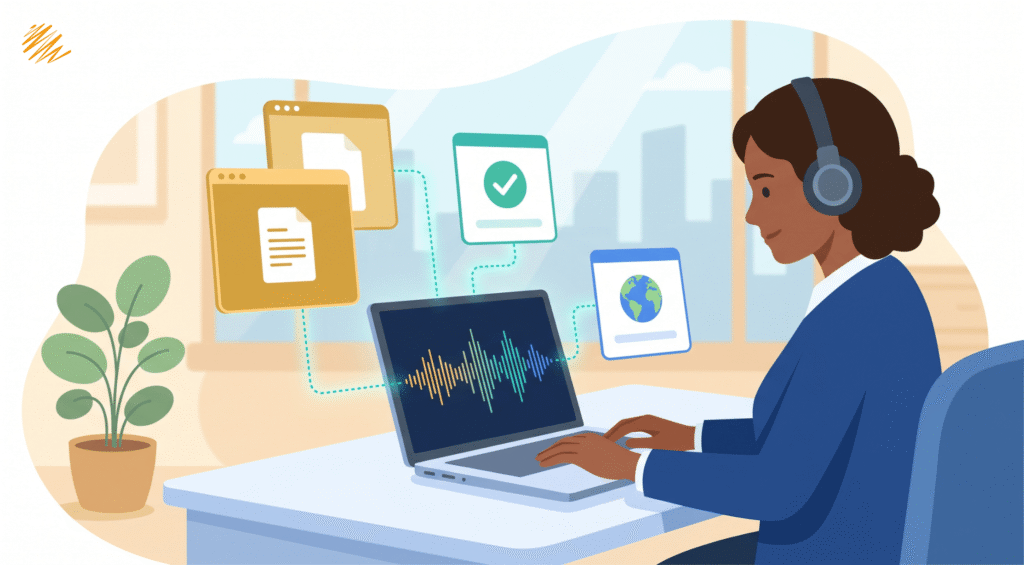
A global training team once recorded twelve product demo videos in English, sent the raw files straight to a translation vendor, and got a quote back that tacked on three unplanned days — for transcription nobody had budgeted, because nobody realized it was a separate step at all. The Step Everyone Forgets to Budget For It's an easy mistake to make, because the missing step is invisible until it isn't. A recording feels finished the moment it's recorded. But translators work from text, not audio — so somewhere between "we have the video" and "we have the translated version," someone has to turn spoken words into a clean written transcript. If all you have is a recording, someone turns it into words first — either you, unexpectedly, or your vendor, at an unplanned cost. Transcription vs. Captioning vs. ASR: Three Things That Get Confused Transcription, captioning, and automatic speech recognition often get lumped together. They're related, but they solve different problems. The American Translators Association treats a clean source transcript as the starting point for any downstream language work — and the distinctions below explain why: 1 Transcription converts speech to text in the same language. It's the raw material…
September 1, 2026